Charles Armstrong
Designer
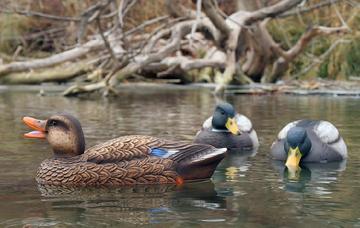
In 1938 in Houston, Texas, Charles L. Armstrong began to build one of the first decoys constructed of waterproofed, pre-printed cloth, sewn and stuffed with Kapok and granulated cork. Kapok was the seed fluff from a tropical tree native to Southeast Asia and Mexico. The decoys were fitted with a wooden bill insert and glass eyes. Armstrong produced mallard, pintail and bluebill species in drakes and hens. Later on in the 1940’s, black ducks, snow and Canada geese were also produced in pairs.
Very early Armstrong decoys had the Armstrong name and “patent pending” stamped on the underside of the bill. A patent was issued on November 26, 1940. All Armstrong decoys utilized a brass ring sewn on the bottom front of the decoy to use as an anchor point. Several other later manufacturers used a cloth loop as an anchor point. All Armstrong decoys have a signature heavy thread sewn through the body and anchored at the bottom.
Subject ID: 76580
MoreIn 1938 in Houston, Texas, Charles L. Armstrong began to build one of the first decoys constructed of waterproofed, pre-printed cloth, sewn and stuffed with Kapok and granulated cork. Kapok was the seed fluff from a tropical tree native to Southeast Asia and Mexico. The decoys were fitted with a wooden bill insert and glass eyes. Armstrong produced mallard, pintail and bluebill species in drakes and hens. Later on in the 1940’s, black ducks, snow and Canada geese were also produced in pairs.
Very early Armstrong decoys had the Armstrong name and “patent pending” stamped on the underside of the bill. A patent was issued on November 26, 1940. All Armstrong decoys utilized a brass ring sewn on the bottom front of the decoy to use as an anchor point. Several other later manufacturers used a cloth loop as an anchor point. All Armstrong decoys have a signature heavy thread sewn through the body and anchored at the bottom.
Subject ID: 76580
Subject ID: 76580