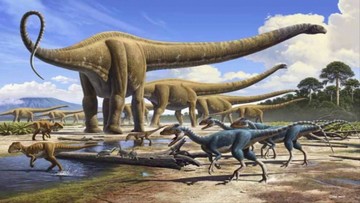
Iguanodon
Dinosaur Species | Species
Iguanodon, named in 1825, is a genus of ornithopod dinosaur that existed roughly halfway between the first of the swift bipedal hypsilophodontids of the mid-Jurassic and the duck-billed dinosaurs of the late Cretaceous. While many species have been classified in the genus Iguanodon, dating from the late Jurassic Period to the early Cretaceous Period of Asia, Europe, and North America, taxonomic revision in the early 21st century has defined Iguanodon to be based on one well-substantiated species: I. bernissartensis, which lived from the late Barremian to the earliest Aptian ages (Early Cretaceous) in Belgium, Spain, Germany, England, Portugal and possibly elsewhere in Europe, between about 125 and 120 million years ago. Iguanodon were large, bulky herbivores. Distinctive features include large thumb spikes, which were possibly used for defense against predators, combined with long prehensile fifth fingers able to forage for food.
Subject ID: 109561
MoreIguanodon, named in 1825, is a genus of ornithopod dinosaur that existed roughly halfway between the first of the swift bipedal hypsilophodontids of the mid-Jurassic and the duck-billed dinosaurs of the late Cretaceous. While many species have been classified in the genus Iguanodon, dating from the late Jurassic Period to the early Cretaceous Period of Asia, Europe, and North America, taxonomic revision in the early 21st century has defined Iguanodon to be based on one well-substantiated species: I. bernissartensis, which lived from the late Barremian to the earliest Aptian ages (Early Cretaceous) in Belgium, Spain, Germany, England, Portugal and possibly elsewhere in Europe, between about 125 and 120 million years ago. Iguanodon were large, bulky herbivores. Distinctive features include large thumb spikes, which were possibly used for defense against predators, combined with long prehensile fifth fingers able to forage for food.
Subject ID: 109561
Subject ID: 109561